
Thoughts
Rights on Paper, Rights in Practice: the man from the Miami-Dade Courthouse, Unpaid Invoices, and Access-to-Justice
Why possessing a legal right is not the same as being able to understand, invoke, afford and ultimately realize it.
Thoughts
Witold KowalczykA morning in the Miami-Dade Courthouse
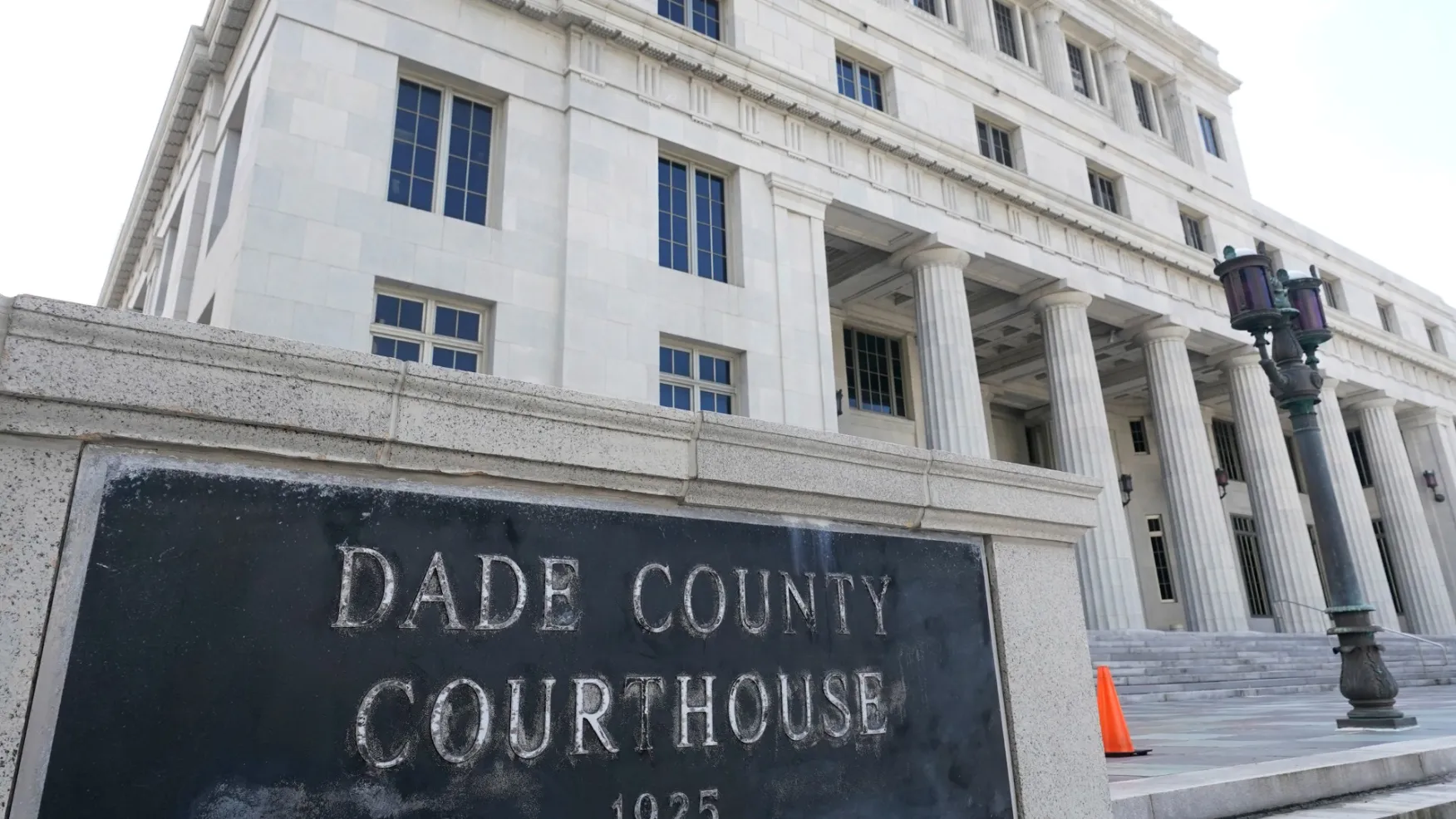
“Disculpa,” I heard him say behind me. “¿Puede usted ayudarme?” I turned around to find an older man looking at me. I was clearly the person he was addressing. I replied with a short and timid “Sí” while trying to catch my breath and wondering how he knew I spoke Spanish. It was an extremely hot July morning in Miami (or as the locals would say, just a July morning in Miami), and I had just made my way into the lobby of the historic Miami-Dade County Courthouse, where we were now both standing.
The checkered marble floor and Art Deco, gold-plated elevator doors were quiet reminders of the building's long history. A history measured not only in age and decor, but also in the notorious criminal cases it heard when it still served as a criminal courthouse. In 1930, Al Capone faced a perjury trial there and was acquitted before his later tax conviction in Chicago. Three years later, in 1933, Giuseppe Zangara pleaded guilty after attempting to assassinate President-elect Franklin D. Roosevelt and fatally wounding Chicago mayor Anton Cermak. A judge initially sentenced him to 80 years. After Cermak died from his wounds, Zangara was convicted of murder and executed - apparently complaining that cameramen were not present at his execution. Press and cameras were certainly present for the 1966 trial of Candy Mossler, a Miami socialite accused of arranging her husband's murder with her nephew and alleged lover, Melvin Powers. The case became Miami's “trial of the century”, after rockstar lawyer Percy Foreman flew from Houston and shredded the prosecution's story so thoroughly that he didn't even bother to call a single witness for the defense.
If those cases made the building at 73 W. Flagler Street famous, its daily work made it relevant. The Miami-Dade County Courthouse was, after all, the beating heart of South Florida's legal world: a place where the steady wheels of justice processed cases and issued life-changing decisions for plaintiffs and defendants alike. Like any courthouse, it was both a symbol of justice and a factory tasked with turning law into some version of that very justice.
It was because of the court's dual role - as symbol and factory - that my new interlocutor and I found ourselves in its lobby that July morning. I was there for the factory. It was 2011, when I was deep into my legal studies and well before I moved into tech. I was doing a brief internship at Hall, Lamb and Hall, a prestigious boutique litigation firm in Miami. I was about to meet one of the firm's lawyers to attend a hearing, one of many that summer. It was already my third visit to the courthouse in 10 days. The older man was there for the symbol. Encouraged by my willingness to help - I initially thought he was simply asking for directions - he began to explain, in a staccato of Spanish words, the legal issue troubling him. His cousin had recently died, and he wanted to understand whether, and how, he could inherit from her. He had come to court looking for information. He was visibly confused when I explained that a courthouse was not really a place where one could obtain legal advice. When I suggested consulting a lawyer, he abruptly protested: “No quiero pagar!” (“I don't want to pay.”)
I've recounted this story over the years to friends, mostly as a funny anecdote. I used to focus on the surprise of being approached in Spanish and his blunt refusal to pay for a lawyer. But the episode underscores a bigger problem I see in the legal system. In my work today, I see businesses (often treated by the law as sophisticated parties and therefore afforded fewer protections) struggle with legal problems much as that man did. Not because they are careless or incapable, but because of something I've come to define as “rigths on paper vs. rights in practice” gap: the gaping pit that separates possessing a legal right from being able to realize it.
Rights on Paper vs. Rights in Practice
The “rigths on paper vs. rights in practice” gap is the distance between possessing a legally valid right and being able to understand, invoke, afford and ultimately realize it.
When we think of issues with access to justice, we think of despotic regimes or dictatures. We often view it as a relic of the past - a “thing” that existed in Nazi Germany or Communist Soviet Union. If we ever think about its manifestation in America - it's usually through historical cases that gained prominence for their injustice as they were set on the canvas of significant social or historical events. We might think of the Chicago 7 trial and the judge's mistreatment of Bobby Seale, the founder of the Black Panthers, who was bound and gagged in the courtroom after he repeatedly demanded his right to representation. Or the injustice of the Rubin Carter and John Artis trial - both wrongly sentenced by an all-white jury for a triple murder they did not commit. The story was immortalized by Bob Dylan's song, “Hurricane”, and Denzel Washington's 1999 movie of the same name.
Such cases can produce an immediate spike in our sense of indignation, but the daily failures of access to justice are often less visible. The gap is built from smaller frictions: the difficulties millions of people face when trying to understand and resolve ordinary legal problems. Individually, they may not seem serious enough to warrant concern. Taken together, however, they can form an almost impenetrable barrier - like ivy and undergrowth surrounding a long-forgotten building.
Language is one such barrier. Returning to the man in Miami: if I was initially surprised that he addressed me in Spanish, my longer stay in the city taught me that Spanish is often the language people use first. In fact, according to the U.S. Census Bureau's 2020-2024 estimate, 77.2% of Miami residents age five and older speak a language other than English at home. Spanish is often the first language in which people address you - and the first in which you should be prepared to answer.
And it is not enough to speak one language, or two, or ten. You also need to speak legalese: the legal world's own convoluted language, which defies the principles of good writing. With its passive constructions (“Payment shall be made…”); multiple negatives (“shall not be deemed not to have…”); redundant pairs or triplets (“null and void”); nominalizations (“make a determination”); heavy nesting (“X applies, except where Y, unless Z, provided that…”); foreign words (“in lieu”, “inter alia”, “lien”, “force majeure”) - legalese is a different language altogether. Even the most educated people have a hard time understanding what a court letter or contract says when they read it.
Then there are seemingly trivial issues, such as access to legal information. Where do you go when you have a legal problem? Most people will say: a lawyer. But where do you go when you cannot afford one or do not know one? Can you go to a court like the man in Miami? Many courts do provide information - commendably - but it is usually limited to guidebooks on initiating civil proceedings or responding after you have been sued. This seems logical to a lawyer: courts hear legal disputes, ergo they provide info on legal procedure. But does it seem logical to a layperson? After all, courts are the most prominent manifestation of the legal system. Shouldn't they offer general help and assistance in all legal matters? If not a court, where do you go? Who do you ask? Your congressman/woman who drafts the laws? The DOJ? A lot of us would most likely ask Google or ChatGPT. Yet I've found that many practical details - what to actually do, where to actually file, what a regulation actually means in this context - exist in the form of tribal knowledge passed between lawyers.
And then there is time. People can wait, and wait, and wait. That is, if they can afford to wait. Waiting often means paying a lawyer to keep a case moving. Timelines vary significantly by court and case type. But in 2025, the median time from filing to disposition for U.S. federal civil cases was 15.6 months. Cases resolved during trial had a median of 30.7 months. The time to do the work itself is also substantial. A relatively simple breach-of-contract or debt case might consume 15-40 hours of a lawyer's time if uncontested or resolved early, while a contested but straightforward case might require 50-100 hours. A person proceeding pro se - representing themselves - should expect to spend at least as much time, and often considerably more.
I'm not even mentioning other barriers: legal costs; complex laws; uncertain outcomes; court fees; restrictions on personal self-representation in many proceedings; restrictions on corporate self-representation in most proceedings; fragmented court systems (California, for example, has 58 superior courts, one in each county, with potentially different local rules and filing requirements); limited digitization; statutes of limitation; arbitration requirements; lack of civil legal aid; or the simple fact that obtaining a favorable court ruling does not necessarily mean getting paid.
Impact
I'm not going to argue only that the current legal system is inaccessible to people who cannot afford it. I believe that firmly, but there is nothing novel about the observation. It has been made again, again, again, again and again.
What I see today is that the system can impose so many barriers that it fails both consumers and businesses, even when their underlying rights are relatively clear. Traditional discussion of the justice gap has focused, appropriately, on civil legal problems affecting essential needs such as healthcare, housing, income and child custody. Business-to-business disputes are discussed less often, if at all. I think that is partly because of two assumptions: that businesses are professional and therefore equipped to fight disputes, or that they are wealthy corporations with money to spend on lawyers. Many businesses, however, consist of only one or two people.
In my day-to-day work, I meet companies struggling to recover unpaid invoices from business relationships that have soured. Many claims are worth less than $20,000. Increasingly, however, we also see them in the $30,000, $50,000 and even $200,000 range. The challenges I listed above come from those conversations and related primarily to commercial disputes.
A business facing a $200,000 breach-of-contract dispute might not be viewed like a conventional access-to-justice case. I think it should be. Businesses are ultimately made up of people. The U.S. Small Business Administration reports 36.2 million small businesses. About 29.8 million of them - 82.3% - have no employees, even though the SBA generally defines a small business for research purposes as an independent business with fewer than 500 employees. The access-to-justice problems faced by many of these owner-operated businesses are not so different from those faced by individuals. Some companies can absorb a $200,000 loss; many cannot. An unpaid balance of that size can threaten payroll, working capital and, in some cases, the company's survival.
Making Rights Usable
Closing the gap between rights on paper and rights in practice for American businesses is where Delos is focusing its efforts.
A business struggling to recover a $200,000 invoice may not evoke the same sympathy as an individual looking for answers in a courthouse. For me, however, the parallel is scary. After all, if a business seeking to recover that amount cannot turn a valid right into a practical outcome, where does that leave everyone else?
Photo: AP Photo/Wilfredo Lee